
Word on the Curb: Building Cultural Connection Through Community Finance
From a student-led YouTube channel to a full-service audience engagement agency, Word on the Curb has built its reputation by helping brands connect authentically with young and diverse audiences. With support from Let’s Do Business Finance, the company secured the funding and guidance needed to stabilise the business and invest in future growth.
For founders Ndu Uchea and Hayel Wartemberg, Word on the Curb was never going to be just another marketing agency. It began as a passion project between two university students who felt young people were being misunderstood and misrepresented in mainstream media.
In 2013, while studying in Manchester, the pair launched a YouTube channel with one simple aim: to create honest conversations with young people and tell stories that reflected the reality of youth culture.

“We felt there wasn’t an accurate way of depicting youth in news, media and marketing,” explains Ndu. “So we bought a camera, went around the streets of Manchester and started asking people their opinions.”
Neither founder came from a film background. Hayel aspired to become a journalist, while Ndu was an entrepreneur. Together, they taught themselves how to film, edit and build an audience from scratch, all while balancing full-time jobs.
What started as a side project quickly gained momentum.
By 2014, Word on the Curb had attracted the attention of Channel 4, who approached the team to create content after recognising their ability to authentically engage younger audiences online. At the same time, both founders were gaining experience inside major organisations, with Ndu working at L’Oréal and Hayel at ITV.
“It was interesting because here we were producing content getting millions of views off shoestring budgets, while some large organisations, including the ones we were working for were struggling to truly engage real people,” says Ndu.
In 2017, after building a growing reputation, receiving commendations from then Prime Minister David Cameron and securing commercial work with major organisations, the founders made the decision to go full-time with the business.

Initially operating as a production company, Word on the Curb specialised in creating culturally relevant content for brands and organisations. But when Covid disrupted the creative industry, the business was forced to adapt.
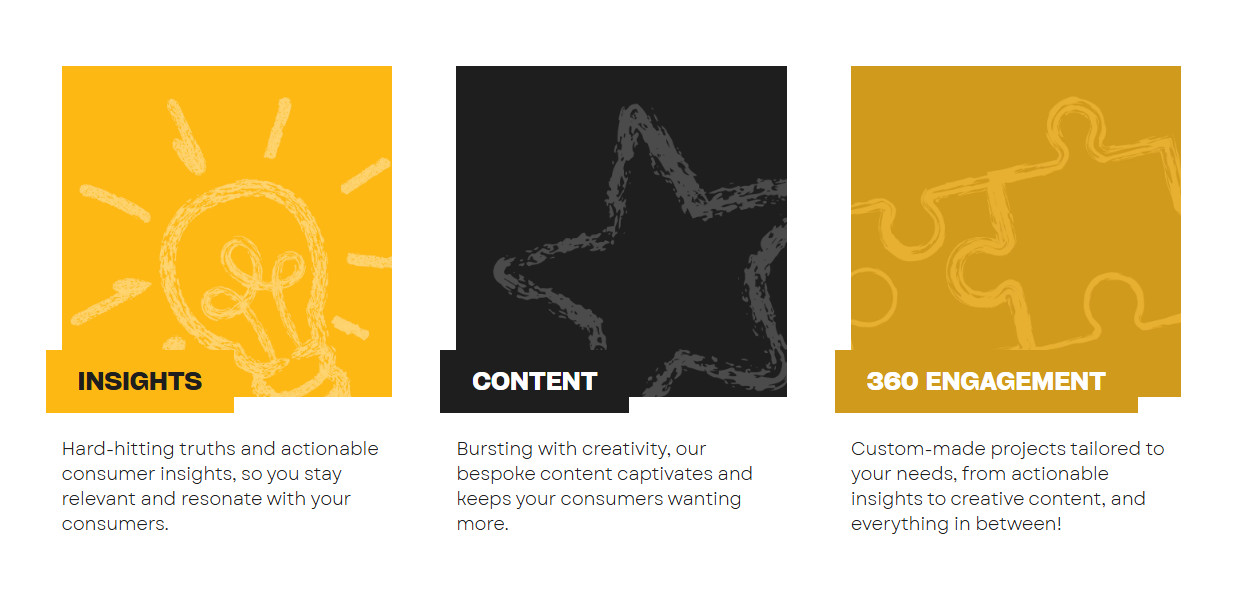
Instead of focusing solely on production, the company pivoted towards audience engagement and market research, building a business model rooted in deep community understanding.
The team intentionally developed an offline community of research participants, allowing them to test creative concepts, measure campaign impact and better understand youth subcultures beyond surface-level metrics.
This created a full 360 agency that could not only provide creative concepts, but who could back it up with solid audience-based research to proof its authenticity and effectiveness. But despite this growth and development, 2024 proved to be one of the business’s toughest years commercially.
Earlier that year, the business reached the final stages of the Black in Business competition run by Channel 4 and Lloyds. Although they did not ultimately win, the experience led to important conversations around business support and finance.
“We needed support to get us through a difficult commercial period,” says Ndu. “Because we didn’t have a long-standing banking history with Lloyds, traditional finance routes weren’t really an option for us.”
Instead of closing the door, Lloyds introduced the founders to the idea of community development finance through Let’s Do Business Finance (LDBF).
Ndu was introduced to Lisa from LDBF, and the conversations that followed proved integral for the future of the business.
“She gave us not only the loan, but support at a time where we were really struggling,” says Ndu. “She helped us understand what community finance looks like and how it differs from mainstream banking”
In November 2024, Word on the Curb secured an initial £30,000 loan through LDBF. This funding allowed the business to repay an expensive short-term loan and stabilise cash flow.
Importantly, the support went beyond the funding itself.
Recognising the stage the business was at, LDBF worked collaboratively with the founders to structure the finance in a manageable and responsible way, splitting the funding into two phases to reduce pressure while supporting long-term growth.
A second loan, approved under the Community Enterprise Fund (CEF), enabled the business to refinance existing borrowing while injecting a further £30,000 of working capital into the company.
The Community ENABLE Funding (CEF) is a British Business Bank initiative designed to increase access to finance for businesses that may struggle to secure funding through mainstream lenders. The programme helps provide fair and affordable finance to viable businesses, particularly those operating in underserved communities, disadvantaged areas, or led by underrepresented groups.
Accessing this programme and receiving the investment helped Word on the Curb focus on two key priorities: increasing visibility for the business and expanding its community of research-ready participants.
“Like many marketing agencies, we were very good at marketing other people, but not always ourselves,” says Ndu. “The funding allowed us to focus on growing our visibility and building the infrastructure behind our audience community.”
For Word on the Curb, the relationship with Let’s Do Business Finance demonstrated the importance of human-led lending and tailored support for growing businesses that may not fit traditional lending models.
Today, Word on the Curb is a full-service audience engagement and creative agency with a team of 10 full-time and five part-time staff, with a stronger financial foundation, a clearer long-term strategy and a renewed confidence in its future.
At its core, however, the mission remains unchanged from those early days filming conversations on the streets of Manchester: creating authentic connections, amplifying underrepresented voices and helping organisations better understand the people they want to reach.
And for Ndu and Hayel, that human connection is exactly what made the support from Let’s Do Business Finance so impactful.
“People have so many tools at their disposal like AI, but I don’t think that will ever substitute what you get from an in-person or personal introduction and suggestion. The CDFI experience itself is so personal and so human. I was dealing with a bank I’d been with for 10 years, who was just completely impersonal. Everything was behind a form. Where you would speak to one person one day and speak to another person the next, and it’s really unhelpful, because then you’re repeating the same issue you’re having, it’s just energy zapping. Having Lisa to talk to, to ask questions, to run through stuff was such a positive experience. It shows that the human touch is still very vital and important.”